Investors can put capital into stable assets like land and property, or into dynamic assets like a business. Business investments are attractive because they offer far higher returns — if the business is run well. Delivering a better return on investment therefore is the economic reason most businesses exist.
Yet many business owners also have a higher purpose. They may have had an insight into a more profitable way of doing something, but it’s usually something they care deeply about as well. If they articulate this purpose convincingly they attract the capital and talent they need to realise it.
Clear communication of the owner’s intent — what they want to achieve with the business — is essential. But this is not a marketing task about writing a clever, but artificial vision statement. It’s about continually thinking what success looks like, in what field of play, and why this should matter to others.
From Grand Strategy to Business Strategy
Our next step is to determine whether the owner’s intent is a complicated or complex1 question. If complicated it’s essentially knowable with the right expertise. For example, we may not know how to enter a new market, but we can find experts to guide us. We need only ensure the means available support the end sought.
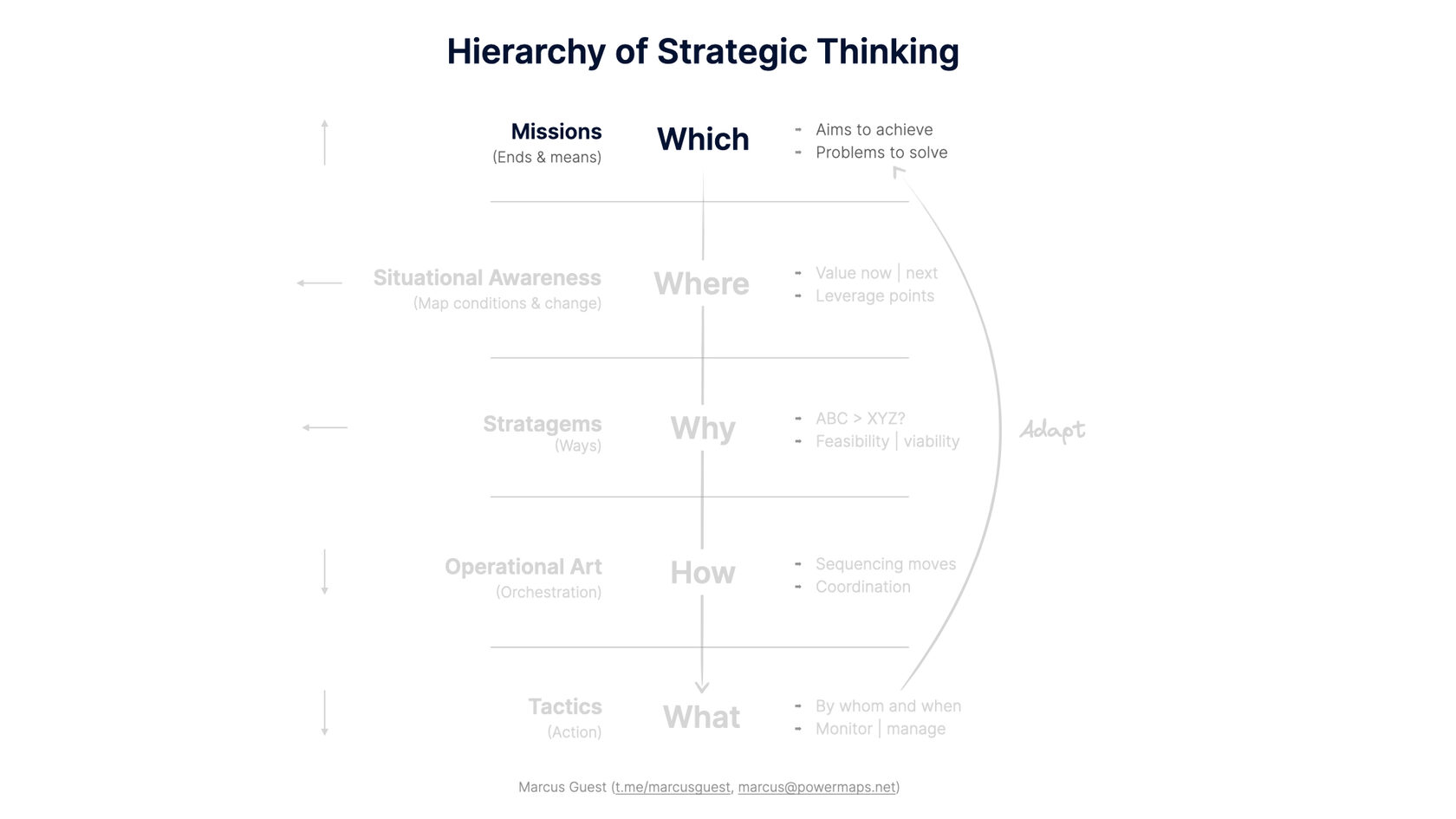
Complex questions — how to outcompete rivals in a market — have no agreed answers. They must be found. We do this by breaking down the aim in the grand strategy into intermediate aims to achieve and immediate problems to solve. These become the missions the business will now focus on.
Many business leaders neglect to set missions, which leads to two critical errors:
To avoid misalignment of talent and over-reliance on a single decision-maker, the leader must identify the missions the business need to focus on it it's going to be successful. Because leaders who articulate aims and problems clearly consistently get more done, with less effort, faster than rivals.
Quick Test
Can you name the top three aims to achieve or problems to solve your business is working on today?
If not, is it because these missions haven’t been identified — or just not communicated?
What Next?
What well-articulated missions look like and how to create them.
To follow this series join the Telegram channel t.me/wardleymapping
Or subscribe to the blog https://powermaps.net/blog
If you found this post useful consider sharing it with others.
And if you’d like to think and act strategically in your organisation explore more here: https://powermaps.net
1 https://en.wikipedia.org/wiki/Cynefin_framework
Yet many business owners also have a higher purpose. They may have had an insight into a more profitable way of doing something, but it’s usually something they care deeply about as well. If they articulate this purpose convincingly they attract the capital and talent they need to realise it.
Clear communication of the owner’s intent — what they want to achieve with the business — is essential. But this is not a marketing task about writing a clever, but artificial vision statement. It’s about continually thinking what success looks like, in what field of play, and why this should matter to others.
From Grand Strategy to Business Strategy
Our next step is to determine whether the owner’s intent is a complicated or complex1 question. If complicated it’s essentially knowable with the right expertise. For example, we may not know how to enter a new market, but we can find experts to guide us. We need only ensure the means available support the end sought.
Complex questions — how to outcompete rivals in a market — have no agreed answers. They must be found. We do this by breaking down the aim in the grand strategy into intermediate aims to achieve and immediate problems to solve. These become the missions the business will now focus on.
Many business leaders neglect to set missions, which leads to two critical errors:
- Misalignment: Leaders mistakenly assume everyone knows what they should be doing and should “get on with it”. But insufficient communication of missions leads to widespread misalignment and waste, as talent focuses on the wrong things.
- Overreach: Now feeling the pressure to find solutions themselves, leaders rely on their own intuition — applying past patterns of success onto the current situation. But this can be wildly misleading in a rapidly-changing environment — no matter how smart or experienced the leader is.
To avoid misalignment of talent and over-reliance on a single decision-maker, the leader must identify the missions the business need to focus on it it's going to be successful. Because leaders who articulate aims and problems clearly consistently get more done, with less effort, faster than rivals.
Quick Test
Can you name the top three aims to achieve or problems to solve your business is working on today?
If not, is it because these missions haven’t been identified — or just not communicated?
What Next?
What well-articulated missions look like and how to create them.
To follow this series join the Telegram channel t.me/wardleymapping
Or subscribe to the blog https://powermaps.net/blog
If you found this post useful consider sharing it with others.
And if you’d like to think and act strategically in your organisation explore more here: https://powermaps.net
1 https://en.wikipedia.org/wiki/Cynefin_framework