Industries never stand still. New technologies emerge, customer expectations shift, and what was once innovative quickly becomes a commodity. The value that mattered yesterday may not matter tomorrow.
In my last post, we mapped how organisations create value today — the North-South axis of a Wardley Map — showing everyone what must be done and how to work together.
Now let’s add the West–East axis. And it’s a game-changer.
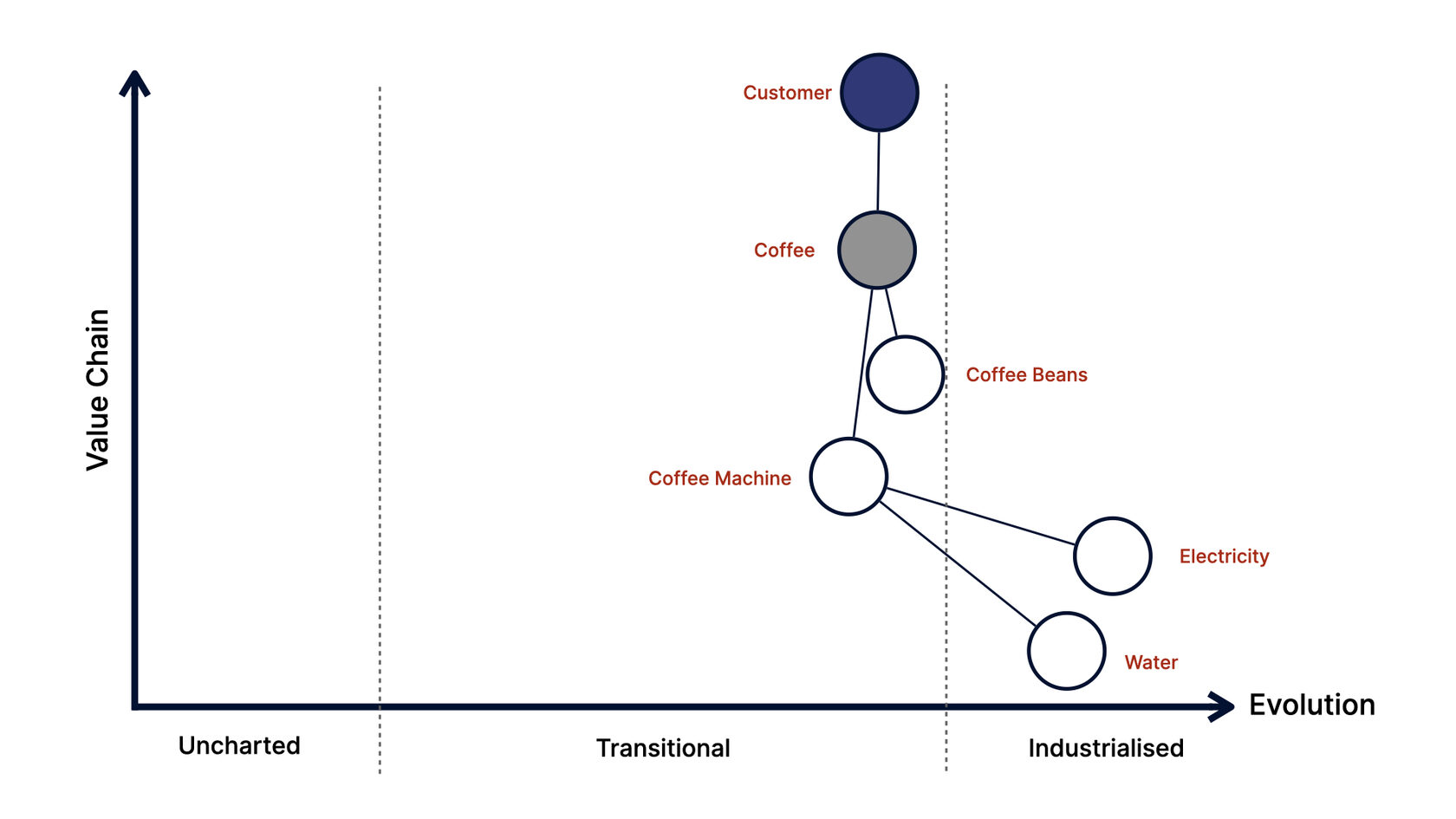
In the map attached, you can see the stages of evolution every component passes through:
Combining the West-East axis with the North–South gives you a complete Wardley Map — showing both where you are and where your industry is heading.
This gives leaders a huge advantage: knowing where to invest, how to adapt, and which moves will shape the future — instead of reacting to it.
In my next posts, I’ll show how to use maps to make smarter bets, cut wasted effort, and outpace competitors.
In my last post, we mapped how organisations create value today — the North-South axis of a Wardley Map — showing everyone what must be done and how to work together.
Now let’s add the West–East axis. And it’s a game-changer.
In the map attached, you can see the stages of evolution every component passes through:
- The uncharted space on the left — where tomorrow’s value will emerge
- Products in the middle — today’s revenue drivers
- Industrialised utilities on the right — low-margin activities, where only scale survives.
Combining the West-East axis with the North–South gives you a complete Wardley Map — showing both where you are and where your industry is heading.
This gives leaders a huge advantage: knowing where to invest, how to adapt, and which moves will shape the future — instead of reacting to it.
In my next posts, I’ll show how to use maps to make smarter bets, cut wasted effort, and outpace competitors.