Imagine your friend asks you to teach them how to play chess. What would you show them first?
Probably the board, the chess pieces and how they move. You’d explain the aim (checkmate the opposing king) and maybe show them some special moves, like castling.
Then you’d let them practice by playing some games against others.
Imagine this friend comes back to you in a few months. They’ve beaten their other friends. But then entered a tournament and lost quickly. So now they want you to show them more.
Now you’d show them a few openings and counter-openings. Explain some theory about the middle game and endings. And probably a few more sophisticated moves, like pinning pieces.
Becoming a grandmaster is still far off from here. But armed with this knowledge — and with more practice — your friend should be capable of winning a few games in a tournament or two.
Now change the scenario. A client has asked me to train them in strategy. This is what I’d do first.
Create a Wardley Map of their business landscape with them. Think of this as the equivalent of a chessboard. It shows who their users are, what those users need, and how they create value by satisfying those needs.
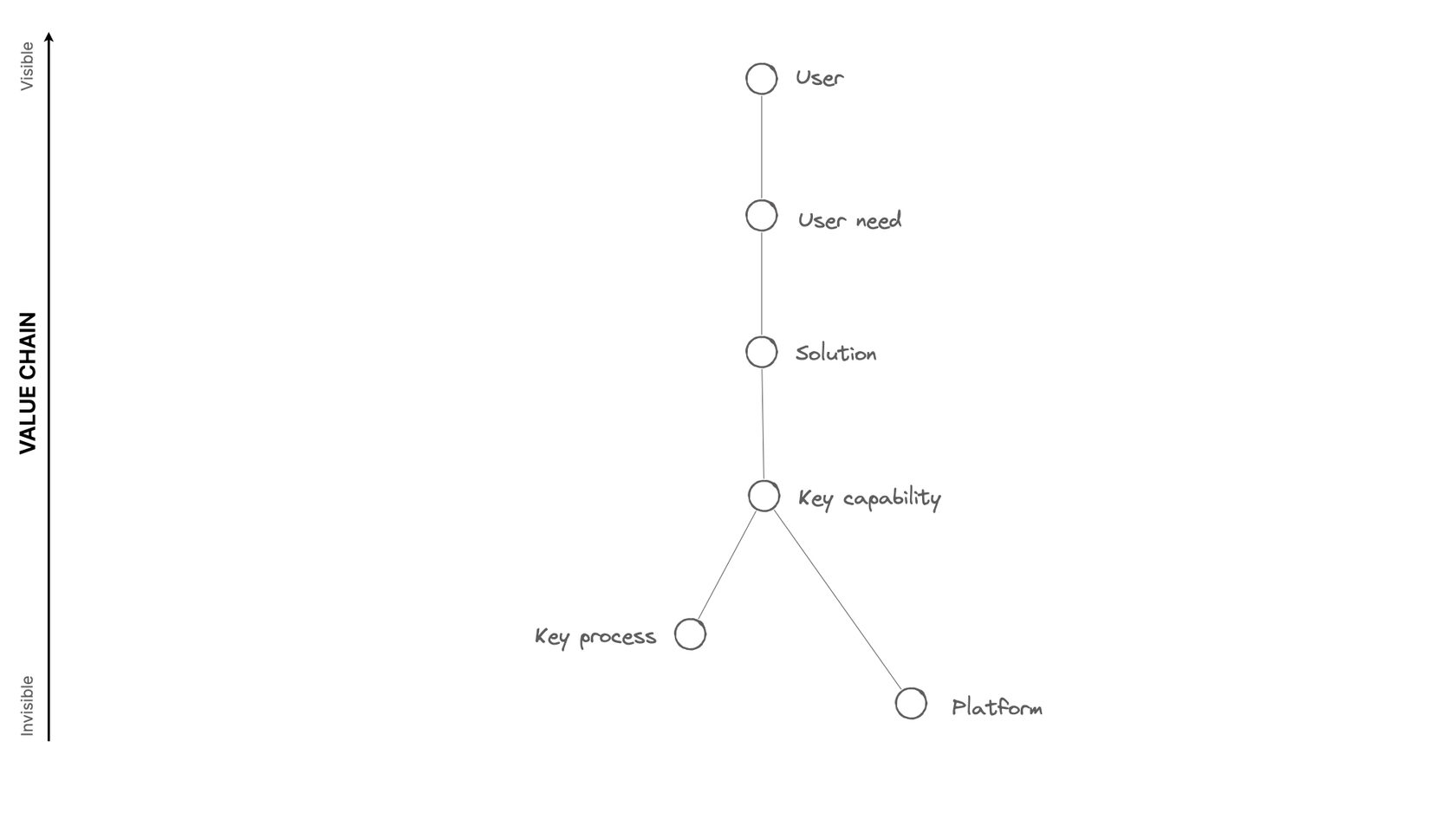
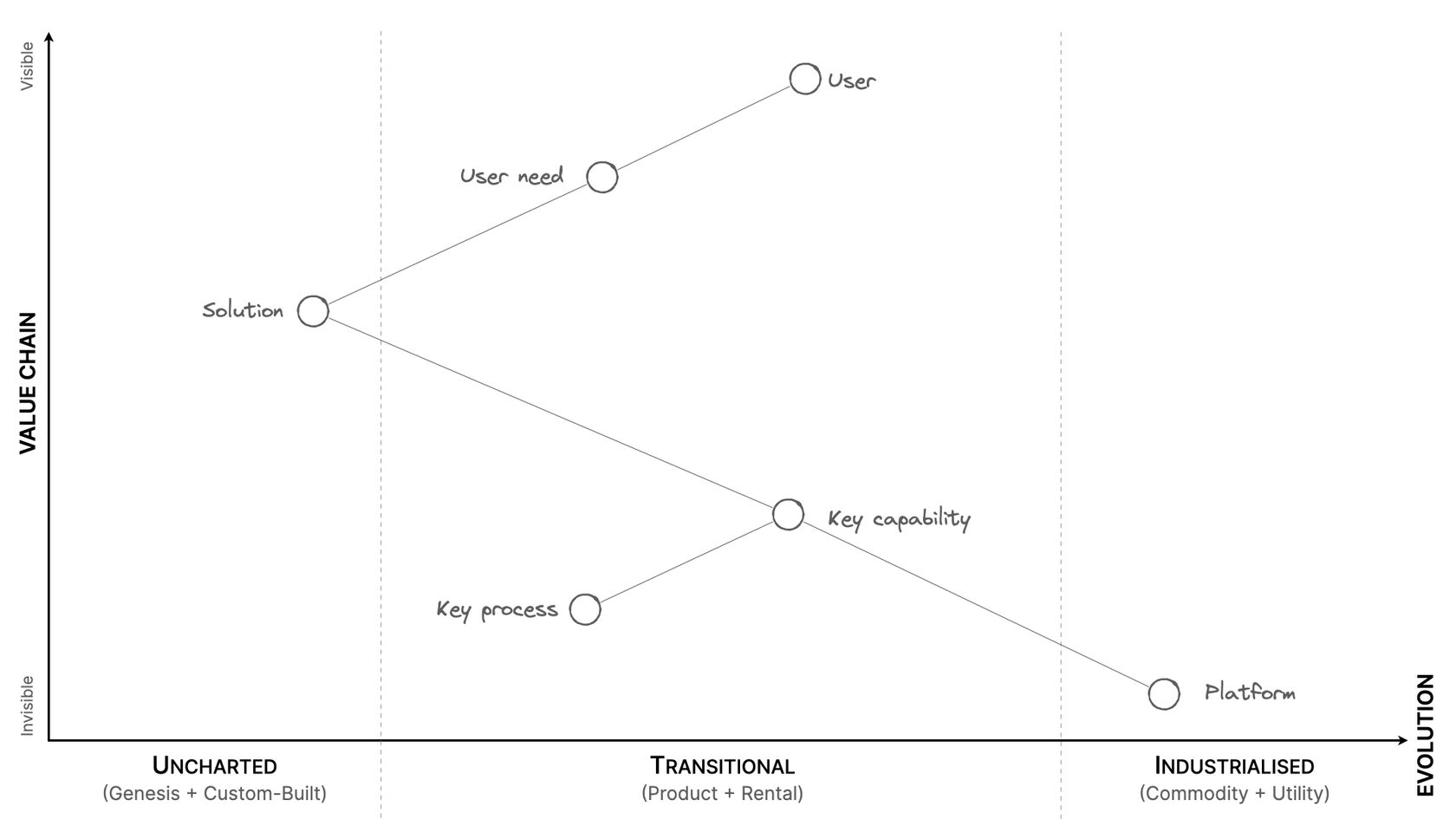
Then we'd discuss how evolved each component is in their value chain — all the activities and practices they perform to satisfy user needs. We’d identify what is:
- New and exciting, but uncertain (on the left)
- Low margin, and a cost of doing business (on the right)
- In-between, a product or service generating revenues (in the middle)
This is equivalent to showing how the pieces on a chessboard move.
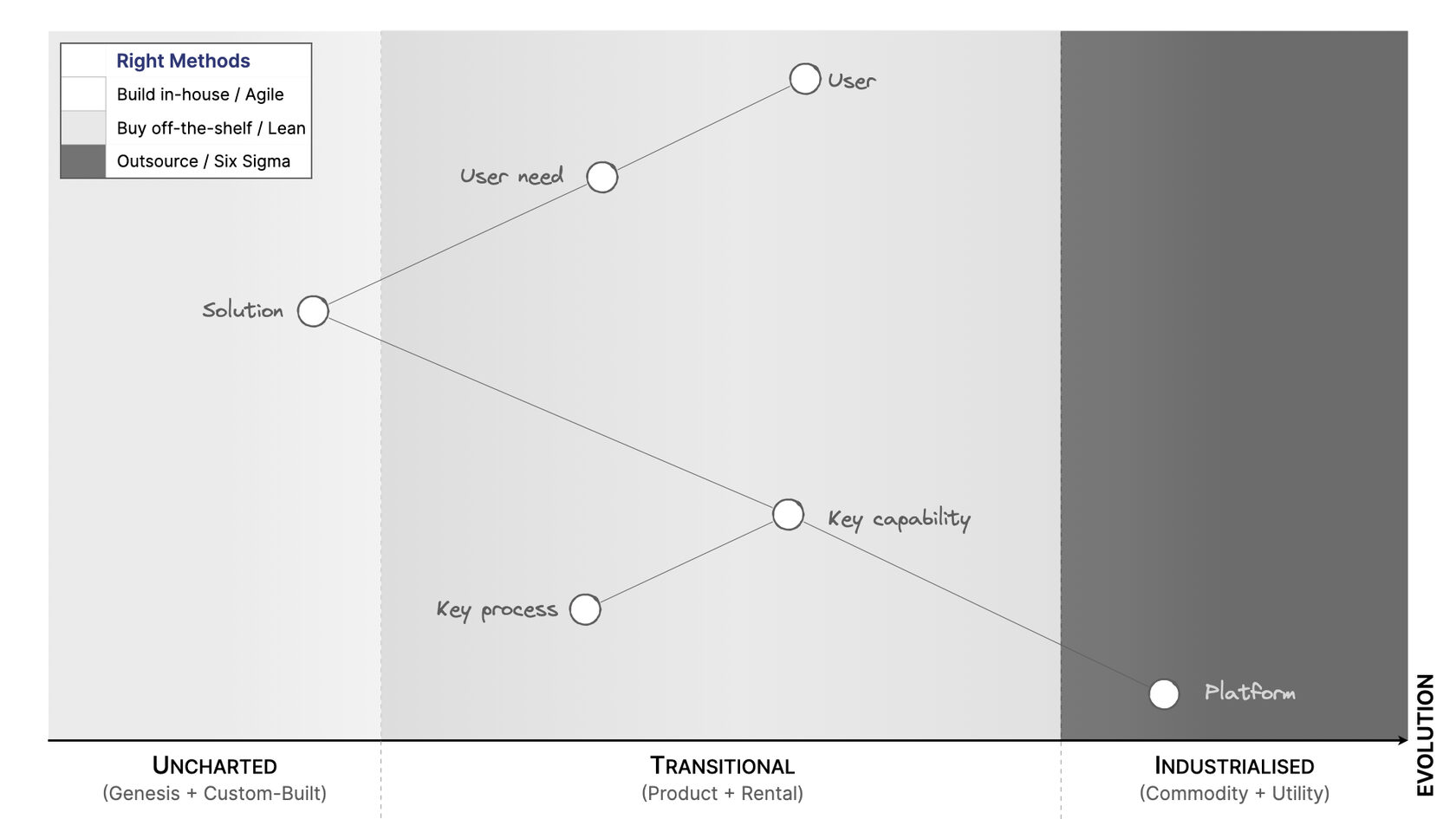
Next, I’d ask my client what aim they’re trying to achieve (what does winning look like for them) or what problem they’re trying to overcome. Then I’d show some special moves, like which methods to use where:
- Build the uncertain components on the left with Agile methods, if they get this right it could be valuable
- Buy any established components in the middle off the shelf, or use Lean methods to reduce waste
- Outsource commodity-like components on the right, or use Six Sigma to reduce deviation.
This is equivalent to showing special moves in a game of chess — moves that quickly and easily add value.
Armed with just this information — which would have taken no more than a couple of hours to agree — my client would already have a much clearer way of thinking strategically. They’d be able to:
- See their landscape clearly (like seeing the chessboard)
- Anticipate how things are changing (like understanding how chess pieces move)
- Understand the importance of satisfying user needs better than rivals (to win the game)
- Have clear guidance on what to build, buy or outsource (special moves).
In the next post, I'll show the equivalent of openings, counter-openings, and theory about the middle game — and the moves that separate great players from good ones.
Subscribe to my weekly blog on situational awareness, strategic thinking and Wardley Mapping. Or get in touch directly: t.me/marcusguest