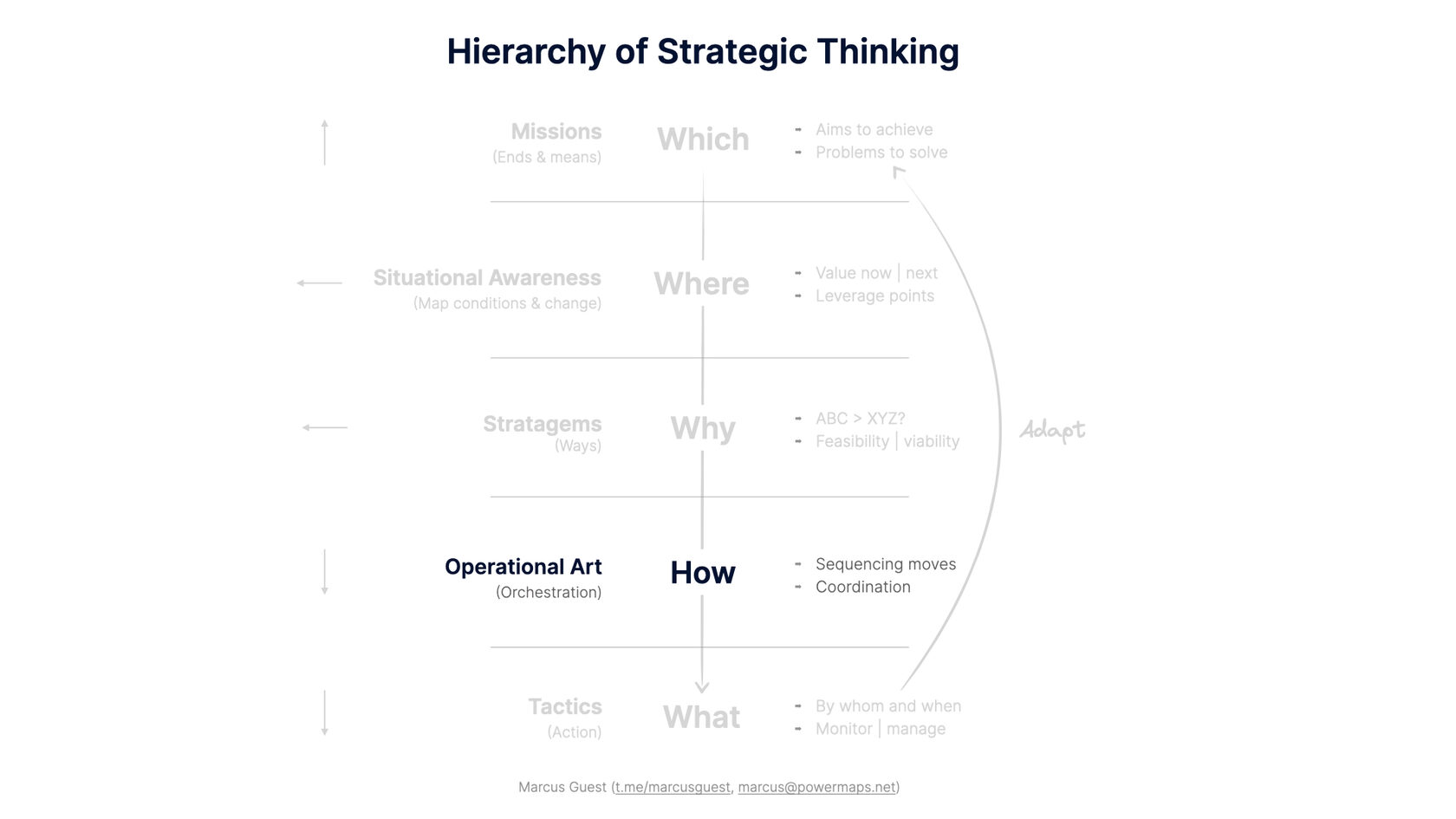
Once we’ve decided the moves we’re going to make, we need to think how we’re going to make them. If we’ve involved our talent in the strategic thinking process — following the Hierarchy of Strategic Thinking — we’re half way there: Talent knows what we’re doing and why.
Now we build a bridge from our strategic choices to the tactical level where they’ll be put into action. This is more than a plan telling talent what to do — as talent tends to respond poorly to coercion. Success also comes from constantly adapting as situations change, not from blindly following a rigid plan.
This is operational art: Focusing on the order we do things (sequencing) and how to adapt when reality unfolds in unexpected ways (coordination). It’s an essential capability for every organisation in a changing world — but one rarely practised in business today.
Sequencing
New strategic move needs to be ‘installed’ — like a new program on a computer. We must decide whether to build, buy or outsource the technologies or capabilities we’ll need. This is another reason we use Wardley Maps — it makes it easy to agree on the right methods in our situation.
Talent can now be tasked to map the areas they’re responsible for in more detail. Leaders can now see what they’re doing, how and challenge them. The open conversations this enables creates alignment, but also trigger new insights — sudden and unexpected shifts to better courses of action.
The length of the installation phase is dictated by the ambitions of our moves and the amount of work to do. Once complete, we’re ready to deploy our new strategic moves. Now we repeat the process — mapping it out, deciding which methods to use where, and learning if there are better ways of doing things.
Coordination
Maps help talent see the bigger picture, their role in it and the role others in the organisation play and the mutual dependencies between them. Recognising these interdependencies encourages talent to forge links directly with others who are important to them, rather than relying on management intervention or processes.
By treating talent like adults — involving them in strategic thinking and giving them the autonomy to decide how they will deliver on their responsibilities — talent act like adults. Leaders rarely need to step in to manage interactions between their teams of talent.
Freed from micromanaging everyone and every interaction, leaders can focus on the art of leading: Establishing feedback loops — free of delay and distortion — to ensure issues are quickly addressed and new insights rapidly adopted. This is how the organisation becomes stronger through action.
Quick Test
Think about your organisation’s last strategic move:
Was talent involved in how to install it and coordinated its own actions?
Or was it rolled out by management with everything routed through them?
If your answers are more the latter, then operational art is absent in your organisation.
What Next?
Orchestrating talent to turn moves into action.
To follow this series join the Telegram channel t.me/wardleymapping
Or subscribe to the blog https://powermaps.net/blog
If you found this post useful consider sharing it with others.
And if you’d like to think and act strategically in your organisation explore more here: https://powermaps.net
Now we build a bridge from our strategic choices to the tactical level where they’ll be put into action. This is more than a plan telling talent what to do — as talent tends to respond poorly to coercion. Success also comes from constantly adapting as situations change, not from blindly following a rigid plan.
This is operational art: Focusing on the order we do things (sequencing) and how to adapt when reality unfolds in unexpected ways (coordination). It’s an essential capability for every organisation in a changing world — but one rarely practised in business today.
Sequencing
New strategic move needs to be ‘installed’ — like a new program on a computer. We must decide whether to build, buy or outsource the technologies or capabilities we’ll need. This is another reason we use Wardley Maps — it makes it easy to agree on the right methods in our situation.
Talent can now be tasked to map the areas they’re responsible for in more detail. Leaders can now see what they’re doing, how and challenge them. The open conversations this enables creates alignment, but also trigger new insights — sudden and unexpected shifts to better courses of action.
The length of the installation phase is dictated by the ambitions of our moves and the amount of work to do. Once complete, we’re ready to deploy our new strategic moves. Now we repeat the process — mapping it out, deciding which methods to use where, and learning if there are better ways of doing things.
Coordination
Maps help talent see the bigger picture, their role in it and the role others in the organisation play and the mutual dependencies between them. Recognising these interdependencies encourages talent to forge links directly with others who are important to them, rather than relying on management intervention or processes.
By treating talent like adults — involving them in strategic thinking and giving them the autonomy to decide how they will deliver on their responsibilities — talent act like adults. Leaders rarely need to step in to manage interactions between their teams of talent.
Freed from micromanaging everyone and every interaction, leaders can focus on the art of leading: Establishing feedback loops — free of delay and distortion — to ensure issues are quickly addressed and new insights rapidly adopted. This is how the organisation becomes stronger through action.
Quick Test
Think about your organisation’s last strategic move:
Was talent involved in how to install it and coordinated its own actions?
Or was it rolled out by management with everything routed through them?
If your answers are more the latter, then operational art is absent in your organisation.
What Next?
Orchestrating talent to turn moves into action.
To follow this series join the Telegram channel t.me/wardleymapping
Or subscribe to the blog https://powermaps.net/blog
If you found this post useful consider sharing it with others.
And if you’d like to think and act strategically in your organisation explore more here: https://powermaps.net