For too long, strategy has been the preserve of a special caste, far from the action, crunching data and drafting plans in PowerPoint slides that tell others what to do. Those excluded from this process feel coerced. And when plans fail to survive contact with reality — and ‘execution’ is blamed — this disconnect compounds.
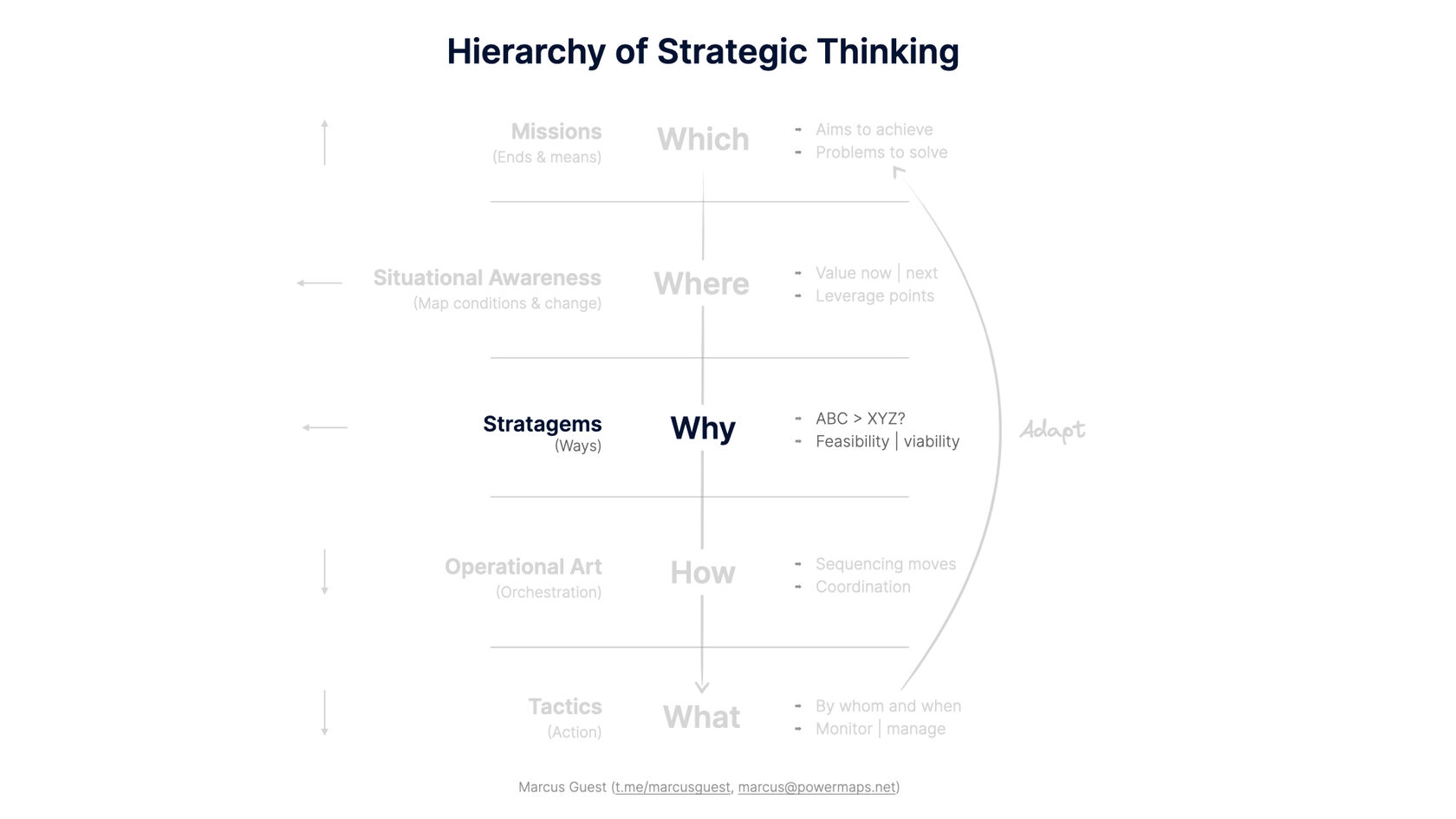
But strategy is not about making plans. It’s about finding ways to realise the organisation’s missions, using the means available, or that can be acquired. It’s a practice of learning and discovery — more art than science — and works best when talent is included in the strategic thinking process.
Leverage Points
Good choices sit at the heart of strategy. But good choices have to be made across the entire organisation, by everyone, every day. Because strategy is what we do — not what a small caste purporting to have preternatural powers say will happen over the next one to five years.
Good choices happen when we have a sound grounding in reality — an awareness of how we create value today and how that’s changing. We can then seek leverage points — locations in our landscape where small actions, performed well, can have outsized, positive effects.
With maps of our landscape we can bring the collective knowledge of talent online to challenge assumptions and discover new moves that can shape conditions to our advantage. We then compare these — so we can explain why we’re making these moves here over those moves there — which creates wider buy in.
Stratagems
We make moves by combining stratagems — direct and indirect forms of action that shift the balance of power in our favour by simultaneously improving our position, whilst decreasing that of our rivals:
There are an unlimited number of stratagems we can deploy to shape the landscape to our advantage. But any choices we make must be grounded in our reality. This is why we use maps — to bring collective knowledge online and discover unique moves that rivals will not see coming.
Quick Test
In your next “strategy” meeting, ask:
What choices do we have for solving our most important mission today?
If you only have one choice — to launch an initiative or not — then no strategic thinking has taken place.
It’s time to start mapping.
What Next?
Testing options for action.
To follow this series join the Telegram channel t.me/wardleymapping
Or subscribe to the blog https://powermaps.net/blog
If you found this post useful consider sharing it with others.
And if you’d like to think and act strategically in your organisation explore more here: https://powermaps.net
But strategy is not about making plans. It’s about finding ways to realise the organisation’s missions, using the means available, or that can be acquired. It’s a practice of learning and discovery — more art than science — and works best when talent is included in the strategic thinking process.
Leverage Points
Good choices sit at the heart of strategy. But good choices have to be made across the entire organisation, by everyone, every day. Because strategy is what we do — not what a small caste purporting to have preternatural powers say will happen over the next one to five years.
Good choices happen when we have a sound grounding in reality — an awareness of how we create value today and how that’s changing. We can then seek leverage points — locations in our landscape where small actions, performed well, can have outsized, positive effects.
With maps of our landscape we can bring the collective knowledge of talent online to challenge assumptions and discover new moves that can shape conditions to our advantage. We then compare these — so we can explain why we’re making these moves here over those moves there — which creates wider buy in.
Stratagems
We make moves by combining stratagems — direct and indirect forms of action that shift the balance of power in our favour by simultaneously improving our position, whilst decreasing that of our rivals:
- If we’re market leaders, we might use open source approaches to accelerate the industry’s development and increase the value of our position.
- If we’re looking to enter a new market, we may direct investment into a valuable piece of real estate — something deep down in that industry’s value chain that will make us indispensable to others.
- If we’re under pressure from rivals in an adjacent market — one threatening to eat away at our long-established position — we might sow seeds of fear and doubt to try and derail it.
There are an unlimited number of stratagems we can deploy to shape the landscape to our advantage. But any choices we make must be grounded in our reality. This is why we use maps — to bring collective knowledge online and discover unique moves that rivals will not see coming.
Quick Test
In your next “strategy” meeting, ask:
What choices do we have for solving our most important mission today?
If you only have one choice — to launch an initiative or not — then no strategic thinking has taken place.
It’s time to start mapping.
What Next?
Testing options for action.
To follow this series join the Telegram channel t.me/wardleymapping
Or subscribe to the blog https://powermaps.net/blog
If you found this post useful consider sharing it with others.
And if you’d like to think and act strategically in your organisation explore more here: https://powermaps.net