The problem isn’t that some people are playing checkers while others are playing chess. The problem is that we’re playing chess while others are playing weiqi.
Uncertainty sits at the heart of the eastern and western approaches to strategy. The Chinese tradition, from which Sun Tzu emerged, recognises that minor fluctuations in conditions amplify into dramatic changes, meaning no two situations are ever identical and universal solutions can’t exist. In the West, Clausewitz recognised that ‘friction’ — the accumulation of many unforeseen events that make the simplest thing difficult — renders analysis and predictions unreliable. Both traditions acknowledge uncertainty, but diverge in how to respond to it. Let’s review these differences in the context of the strategic games played in the East and West.
Chess is the leading game of strategy in the West. “The purpose of the game is checkmate, to put the opposing king into a position where he cannot move without being destroyed. The vast majority of games end in total victory achieved by attrition or, more rarely, a dramatic, skilful manoeuvre. The only other possible outcome is a draw, meaning the abandonment of the hope for victory by both parties."1 Chess reflects Clausewitzian thinking: seek absolute domination by concentrating forces against the enemy’s ‘decisive point’.
Weiqi (Go) is the leading game of strategy in the East. Unlike chess, which is a “struggle for the centre of the board” with players seeking to eliminate their “opponent’s pieces in a series of head-on clashes”, weiqi “teaches the art of strategic encirclement”. A “talented weiqi player moves into empty spaces on the board, gradually mitigating the strategic potential of his opponent’s pieces."2 Weiqi reflects Sun Tzu’s thinking — seek relative advantage by cultivating superior potential that eventually becomes impossible to counter.
Using these lenses of chess and weiqi, we can explore three key differences between the eastern and western approaches to strategy and how they apply to both warfare and business. These key differences are:
- Focusing on the internal vs external
- Focusing on singular vs multiple ‘wheres’
- Strategic ‘genius’ as nature vs nurture.
Difference 1: Internal vs External
“A chess mindset … focuses on what one can achieve given limited resources at the moment, whereas a Go player thinks about what he can bring to bear with additional resources."3”.
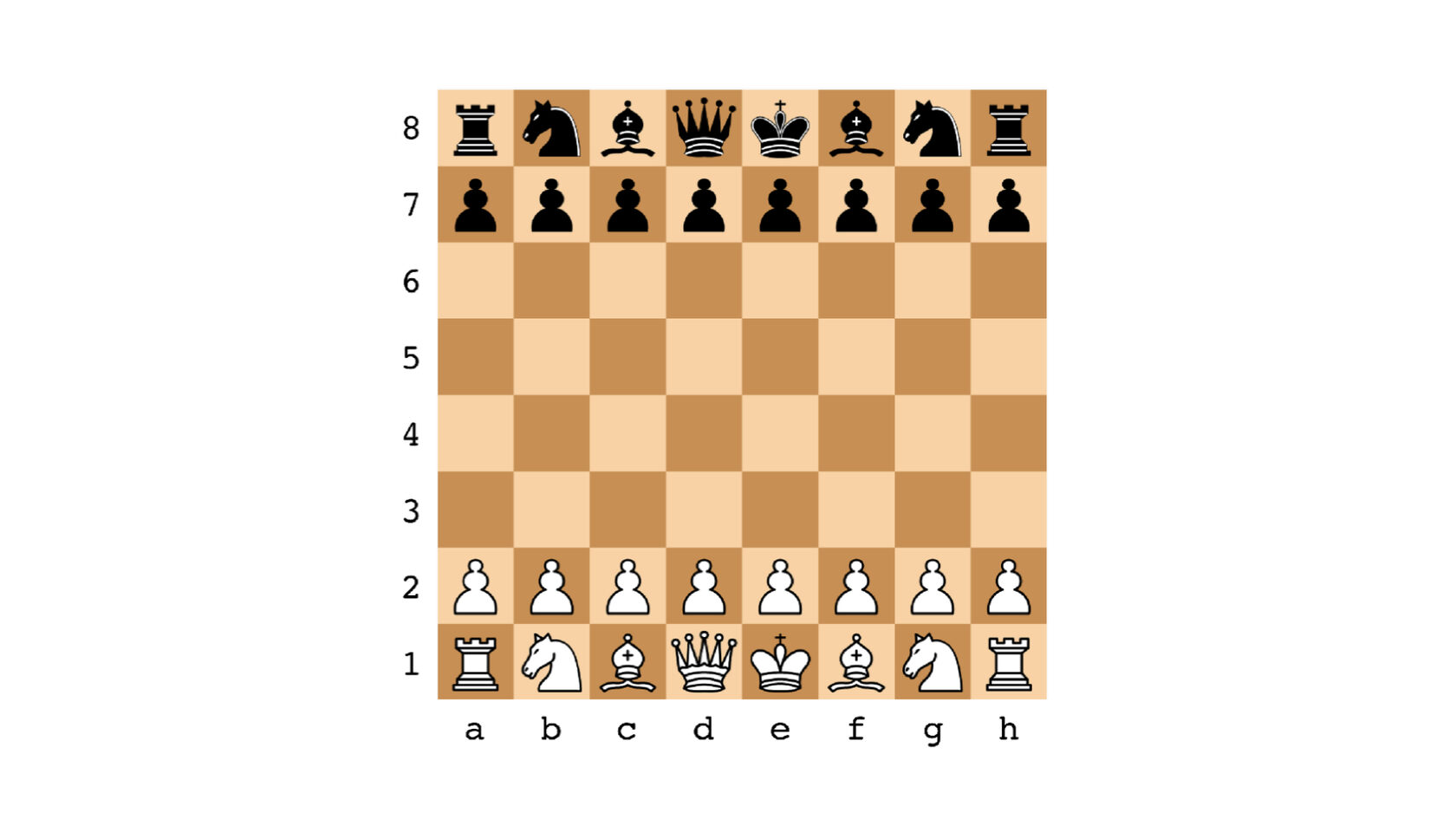
Clausewitz argued that ‘power determines everything in war’. This is reflected in chess as each piece has a clear hierarchy of power: the queen outranks the rooks, rooks outrank bishops, and so on down to the least powerful pieces, pawns. A game of chess starts with this power fully deployed, with all pieces on the board, before being gradually eroded through a battle of attrition, with less powerful pieces sacrificed in exchange for positional advantage. The player who retains power best, by keeping more pieces on the board or deploying them more effectively, gains a competitive advantage.
Fig.18: The Opening Situation In Chess
Accumulating power became the focus of western military strategy in the 19th century, especially following Prussia’s victories in the German wars of unification. Germany’s emergence triggered an arms race with Europe’s other established powers, notably Britain, as each sought to build a superior military machine with which to dominate the other. The ‘Great War’ that broke out in 1914 quickly descended into a bloody, attritional stalemate in the mud of the Western Front, as their mighty military machines, cursed by technological parity, were continually launched at the other’s ‘centre of gravity’ (the opposing military). Western leaders, mistaking indifference to the lives of their soldiers for the determination they believed marked one as a Clausewitzian genius, sacrificed men, like pawns on a chessboard, on an industrial scale of killing. The senseless, multi-year destruction brought a continent to its knees and led some western military strategists to find “fundamental faults [with this] costly and wasteful attrition style of warfare [and] the strategic mindset ever since in the West."4
A notable critic of Clausewitzian military orthodoxy was T.E. Lawrence, a British liaison officer during the Arab revolt against the Ottoman Empire — an ally of Germany during the ‘Great War’. The man who would become known as ‘Lawrence of Arabia’ realised that smaller, irregular Arab forces couldn’t match the larger Ottoman army in conventional warfare, but where military orthodoxy provided him little guidance, military history more than made up for it. History is replete with countless examples of smaller ‘Davids’ defeating mightier ‘Goliaths’: Julu (207 BCE); Badr (624); Morgarten (1315); Agincourt (1415); Panipat (1526); and Lacolle Mills (1814). Since 1900, larger forces have won only 60% of military engagements — only slightly better odds than tossing a coin5 — suggesting that power alone, in contradiction of Clausewitzian orthodoxy, doesn’t determine everything.
Western military strategists challenged Clausewitzian orthodoxy,6 but the Prussian’s ideas had already spread and started to shape the western approach to strategy. In the business world, leaders often believe that success comes from having an organisation that’s run like a ‘well-oiled machine’ — echoing Clausewitz’s belief that a formidable military machine is the decisive factor.’7 This belief has led to a fixation on internal improvements, such as adopting whatever the latest technologies are or ‘best practices’, despite these being easily imitated by competitors. As a result, many businesses are locked in an endless and costly ‘arms race’ of technology adoption and transformations that offer no lasting competitive advantage over their rivals.
***
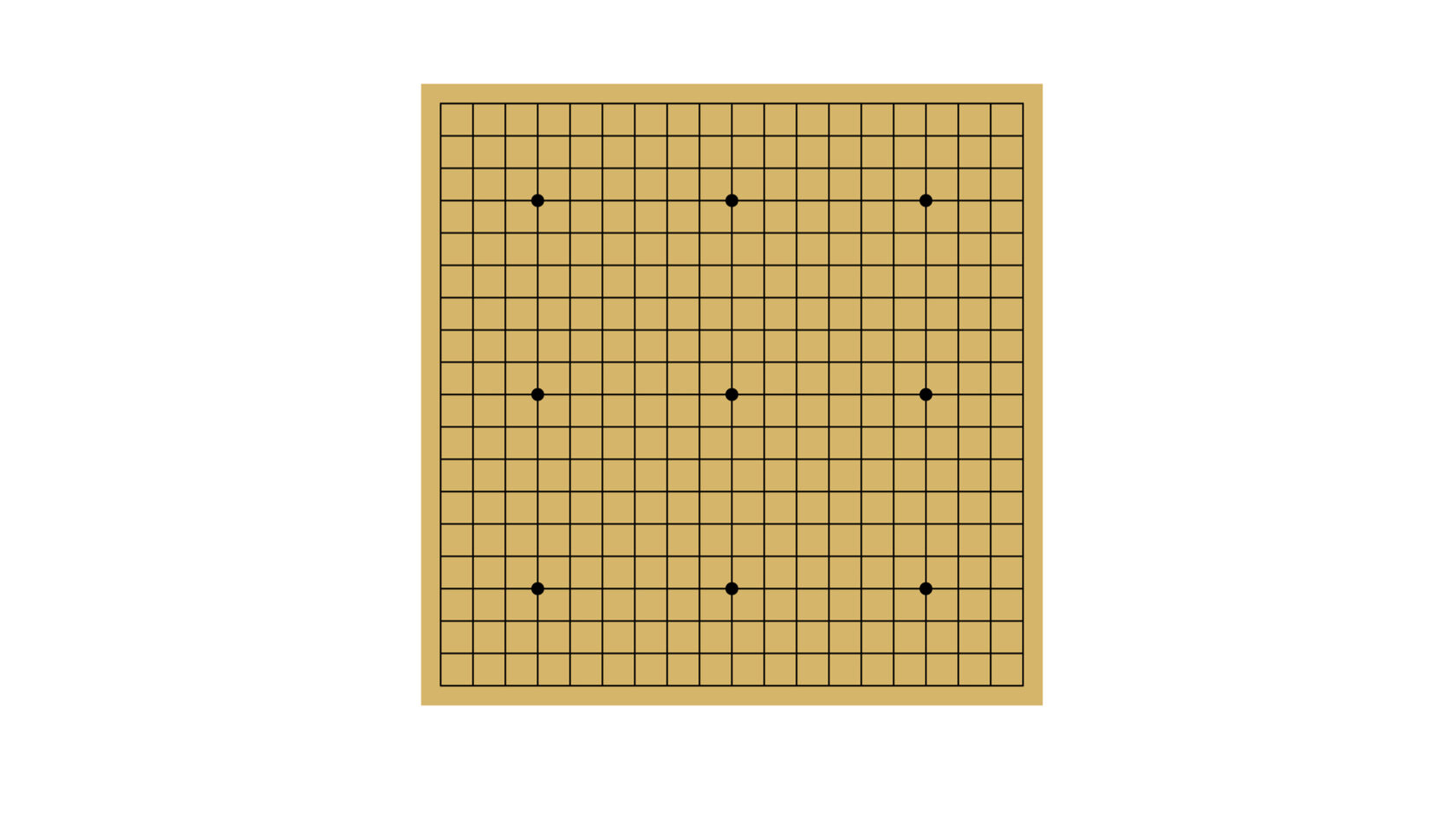
In contrast to chess, where maximum power is deployed from the start, weiqi begins with an empty board. Each player has the same number of ‘stones’, all of equal value, which can be deployed in a near-infinite number of ways. While victory in chess comes from deploying one’s internally accumulated power to dominate the centre of the board, exchanging weaker pieces for stronger ones, victory in weiqi comes from cultivating superior potential by connecting stones to make the whole more than the sum of its parts. This requires attention to multiple engagements across the entire board all happening simultaneously, which makes it especially difficult for the untrained eye to see who’s winning. But a player’s accumulated potential eventually becomesirresistible, limiting the opponent’s options for making moves, forcing them to concede victory. Weiqi reflects the eastern belief in cultivating potential (shi) as the key to success in competitive situations.
Fig.19: The Opening Situation In Weiqi (Go)
As in the West, eastern strategists also stress the importance of developing internal power by adopting the latest technology, developing sound tactics, managing logistics impeccably, and knowing how to engage the enemy in a ‘straightforward’ way. Such orthodox moves make leadership easier by developing the capabilities needed to adapt to “shifting conditions and circumstances in a world where chance, uncertainty and ambiguity dominate."8 But orthodox moves alone are insufficient to deliver victory as unexpected events and the unpredictable actions of rivals undermine even the most powerful and well-oiled of machines.
The eastern approach to strategy relies on unorthodox moves that, unleashed at the right time, surprise and confuse rivals. Rather than only trying to decrease one’s internal level of uncertainty (by peering through the fog), one can also focus externally and increase the levels of uncertainty rivals must deal with — creating a mismatch between rivals and oneself. Misdirection plays a key role in unorthodox moves: subtle feints conceal one’s true intentions, whilst distorting signals — appearing weak when one is strong — lure rivals into making mistakes. Mismatches create openings to surprise rivals, forcing them into mistakes and hindering their ability to counter effectively.
As Laozi, a contemporary of Sun Tzu, advised: ‘to win the empire’, one must:
“Govern the state by being straightforward;
And wage war by being crafty."9
A constant interplay between orthodox (cheng) and unorthodox (ch’i) moves — symbolised by yin and yang in Chinese philosophy — enables one to remain indiscernible, or ‘shapeless’ and therefore difficult to attack, even by powerful rivals. Cultivating potential from the conditions — identifying whom the terrain favours more, or where climate changes can be used beneficially — before unleashing it at the right moment, ‘like a torrent crashing down a gorge’, is how weaker forces vanquish the stronger.
Fig.20: Yin and Yang

Successful unorthodox moves, however, quickly become orthodoxy. Repeating past successes — re-fighting the last war or copying “best practices” — makes one predictable and easier for skilled opponents to counter. General Bonaparte, the archetypal Clausewitzian genius, famously combined orthodox moves (well-drilled formations) with unorthodox moves (unexpected operational thrusts) to out-manoeuvre European rivals.10 But, by the time he became Emperor, this had changed. Napoleon’s innovativemoves, which had once shaped external conditions to his advantage, had become part of military orthodoxy. The Duke of Wellington, following victory over Napoleon at the battle of Waterloo, wryly observed that the French merely “came on in the same old way, and we sent them back in the same old way."11
Difference 2: Singular vs. Multiple Wheres
“In Go, it is a war with multiple campaigns and battlefields. There is no one single focus on the board. A Go player must always keep the whole situation in mind12”.
During World War I, the Arab irregulars advised by ‘Lawrence of Arabia’ launched lightning-fast attacks against the Ottomans across the vast expanse of the Arabian desert. With deep knowledge of the terrain and an ability to cover huge distances at speed, the Arabs exploited conditions expertly and drove their enemy crazy with unorthodox moves. Attacking at different points, huge distances apart, created the illusion of a much larger force, while partially destroying supply lines at multiple points forced the Ottomans to continually rebuild them, exhausting the troops and keeping them guessing about where they would be attacked next. This increased uncertainty undermined their morale. The eventual success of the Arab Revolt — culminating in the capture of Damascus in October 1918 — was a rejection of Clausewitz’s principle that winning in war requires identifying and focusing on a singular ‘decisive point’.
Yet, the western approach to strategy retains a singular focus, mirrored in the game of chess, where “all the moves are geared toward checking the king … [meaning] naturally, chess players are single-minded."13 Single-mindedness in the business world comes in the form of ‘annual strategic plans’ — an idealised image of where the organisation is ‘to be’ in 12 months. But the future doesn’t unfold as predicted. Many strategic plans made for 2020 (probably around a theme of 20/20 vision) were rendered irrelevant by COVID after just a few months. And the long process of making such plans prevented many organisations from adapting quickly enough when the shock hit. They had to abandon their expensive plan or ‘double down’ on it. Many chose the latter, making a virtue of ‘sticking to the plan’. But no chess player starts a game knowing every move they will make, as conditions on the board will change. Excessive single-mindedness limits adaptability.
***
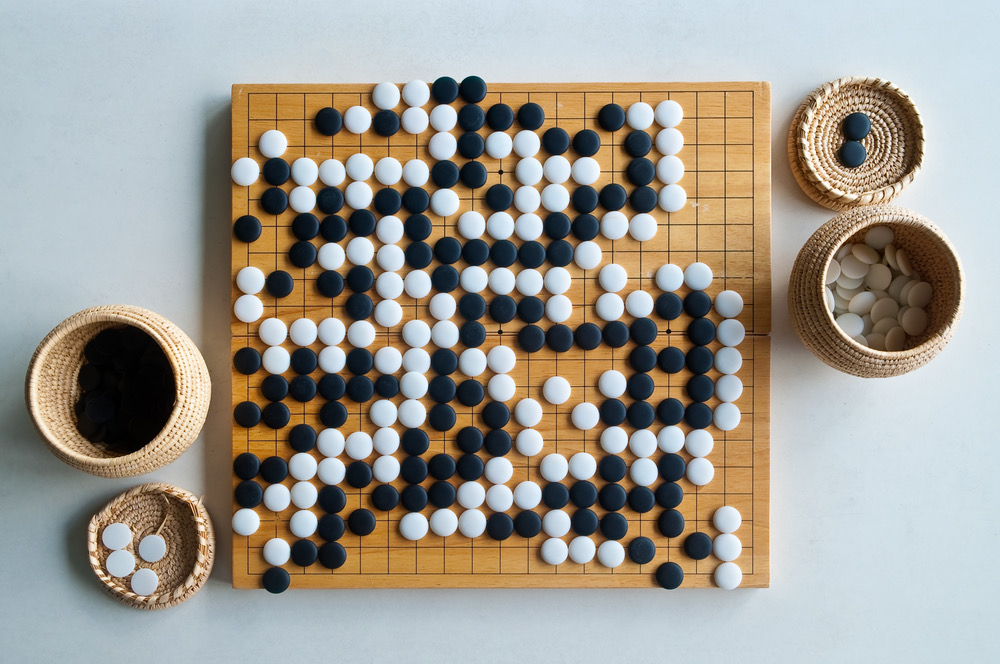
In contrast to chess, weiqi eschews single-mindedness. As each stone is placed on the board, different situations wax and wane in importance. Focusing on only one of these areas to the exclusion of others limits the awareness needed to win. Weiqi players focus on multiple wheres — exploring opportunities and guarding against threats across the entire board simultaneously. This reflects the distrust in the eastern approach to a singular strategy that demands all their attention to the exclusion of other options. When Honda entered the US market, they did so with ‘no strategy other than seeing if they could sell something’, which enabled them to adapt as the situation unfolded in unexpected ways.14 Similarly, when facing an existential industry crisis, Fujifilm pursued multiple wheres to play. Some of these moves succeeded spectacularly — unlike their western counterpart, Kodak, who had focused on a single big bet that failed to pay off.15 In a changing and unpredictable world, focusing on a singular where is a risk no strategist can afford to take.
Fig.21: Multiple Wheres In Play In Weiqi
Detailed plans may provide a comforting sense of certainty, but in a complex world — where we don’t control all the variables due to the unpredictable actions of rivals, the emergence of new technologies, and the occurrence of external shocks — certainty is an illusion. Both Sun Tzu and Clausewitz recognised this, but only Sun Tzu argued that one doesn’t need certainty to win. One simply needs to be less uncertain than rivals. Secrecy and misdirection can increase a rival’s uncertainty, while one attempts to improve one’s own awareness of conditions, how they’re changing, and where better options for action may be. This is the art of strategy. A “prescribed plan and action are the last things a general should seek in warfare"16 or a leader in business. Plans encourage people to be ‘heads down’, focused on hitting artificial targets that were conceived in relative ignorance in the past. They leave them vulnerable to attack from more skilful rivals who can exploit the multiple gaps between plans and reality. “Nothing is more dangerous than becoming immobilised” as it can “make conduct inflexible and prevent an actor from the variation from which all potential stems."17
Difference 3: Strategic Genius: Nature vs. Nurture
“As a prolonged and complex game, Go players focus on building or creating rather than chess players’ emphases on removal and destruction18”.
The influence of Clausewitz in the West established strategy as “an activity in its own right, separate from politics”19 and detached from implementation. Western organisations have embraced this divide, separating themselves into ‘thinkers’ (who make plans) and ‘doers’ (who implement plans). It’s a split that feels natural as we “have heads with which to think and bodies with which to act” and has become a belief “so deeply rooted in the very philosophical basis of western society that it seems indisputable."20
Separating strategy ‘creation’ from ‘execution’ has fuelled the rise of an “industry [of] management consultants, strategic planning staffs, and business school academics"21 around modern business. And, in an increasingly uncertain world, seeking the counsel of ‘strategic geniuses’ — those naturally able to peer through the ‘fog’ and identify the ‘decisive point’ to focus on — is seen as a prudent move by many business leaders, as it frees them up to focus on the important work of driving implementation.
When ‘strategic plans’ fail — as they often do when confronted with an unpredictable reality22 — ‘thinkers’ can blame ‘doers’ for poor execution.23 Yet, any plan that can be derailed by poor execution could not have been much of a plan to begin with. “Every failure of implementation is, by definition, also a failure of formulation."24 Yet few ‘strategic geniuses’ face scrutiny when plans fail. In fact, the more plans fail, the easier it is to convince leaders that the fault lies with the ‘doers’ and a cultural transformation is needed to fix the ‘execution gap’.
***
In the East, strategy was integrated into the overall affairs of state, encompassing the political, diplomatic and logistical. Strategy was not just about achieving victory on (or off) the battlefield, but also about the aftermath of war. “In this broad framework, the art of war is, in essence, the process of diplomacy."25 As a result, strategy in the East is a collective responsibility, an integral part of what everyone should be doing. Success requires a ‘whole of board’ focus.
With no division between strategy and execution — between ‘thinkers’ and ‘doers’ — everyone is expected to identify moves they should make (e.g. seizing opportunities, guarding against threats) and develop the capabilities needed to make them. Fujifilm’s CEO warned his people ‘not to rely on outside consultants’ as strategy cannot be outsourced to others; it must come from within.26And Honda beat the British in the US by learning quickly and adapting effectively in a changing.27Strategy must not be separated from ‘doing’ — strategy is doing, with purpose, and everyone should cultivate this.
The “ancient Chinese notion of genius [being teachable, is] at odds with Clausewitzian genius."28 But Sun Tzu’s ‘Five Factors’29 — purpose, climate, terrain, command and regulations — is a framework anyone can use to increase their awareness about the current situation and how to adapt to conditions more effectively. Awareness-adaptiveness is the mutually reinforcing capability one deploys to cultivate superior potential that, unleashed at the right time, makes victory inevitable. Strategy is not a singular plan of action devised far from the battlefield by a ‘strategic genius’. It’s a series of ‘next-best’ moves made by those on the frontline, constantly responding to changing conditions. What appears to be a ‘strategic plan’ is a mirage of hindsight.
Strategy for an Uncertain World
Isaiah Berlin,30 the Russian-British theorist and historian, famously distinguished between hedgehogs and foxes. Hedgehogs focus on one big idea, while foxes juggle many smaller things. Western strategists, influenced by Clausewitz, resemble hedgehogs: planners who seek a single ‘decisive point’ and launch all their power at it, showing the rugged determination needed to see it through. Eastern strategists, influenced by the Chinese philosophical tradition Sun Tzu emerged from, resemble foxes: opportunists who learn how situations are evolving and — recognising that the unexpected actions of others shape conditions in unpredictable ways — forgo rigid plans in favour of active problem-solving (and problem-making for rivals), then adapting as they go.
Understanding the eastern approach to strategy — awareness/adaptiveness, orthodox/unorthodox moves, and harnessing potential from conditions — is challenging for those educated in the West. Yet, for those able to learn, the Art of War provides a framework for mastering strategy. It challenges the dominant belief in the West that ‘strategic genius’ is something we’re born with. But Sun Tzu’s ‘Five Factors’ helps us democratise strategy: cultivating potential from conditions ourselves and making moves that become as powerful as a river racing down a mountain, capable of arriving at its destination at multiple points — impossible to resist.
1 On China. Kissinger (2011) p45
2 Ibid p47
3 Learning from the Stones: A Go Approach to Mastering China’s Strategic Concept, Shi. David Lai (2004) p.28
4 Science, Strategy and War: The Strategic Theory of John Boyd. Frans P.B. Osinga (2007) p.311
5 Military Power. Biddle, S. (2004) p63
6 We will explore the ideas of one of these, John Boyd, later in this book.
7 See chapter nine — The Western Approach to Strategy.
8 Science, Strategy and War: The Strategic Theory of John Boyd (Strategy and History). Frans P.B. Osinga (2007) p45
9 Tao Te Ching (chapter 57)
10 “Napoleon was said to have studies a French Jesuit’s translation of the Art of War” Strategy: A History. By Lawrence Freedman p.95
12 Learning from the Stones: A Go Approach to Mastering China’s Strategic Concept, Shi. David Lai (2004) p.28
13 Ibid.
16 Deciphering Sun Tzu. Derek M. C. Yuen (2014) p. 162
17 The Mind of War. Hammond p198 quoted in Deciphering Sun Tzu. Derek M. C. Yuen (2014) p. 89
18 Learning from the Stones: A Go Approach to Mastering China’s Strategic Concept, Shi. David Lai (2004) pp.28-9
19 On China. Kissinger (2011) p.48
20 Rise and Fall of Strategic Planning. Henry Mintzberg (1994) p406
21 The Honda Effect. R.Pascale. (1996) California Management Review, Vol 38, No. 4 p80
22 Hence, Mike Tyson’s now famous quote — “Everyone has a plan until they get punched in the face” — when he was asked in an interview leading up to a fight whether he was concerned about his opponent’s strategy.
23 See the end of chapter one — Stop Making Strategic Plans for an example of this from Hewlett-Packard.
24 Rise and Fall of Strategic Planning. Henry Mintzberg (1994) p59
25 Learning from the Stones: A Go Approach to Mastering China’s Strategic Concept, Shi. David Lai (2004) p.3
27 See chapter seven — Time as a Strategic Weapon.
28 The idea of genius in Clausewitz and Sun Tzu. Lukas Milevski (2019)
29 See chapter eight — The Eastern Approach to Strategy.